
Game instructions
How to play
- 2 players
- ranked
Goal and setup
Two players use an 8×8 board. Each starts with a king, queen, two rooks, two bishops, two knights and eight pawns. White moves first. Select your piece, then a legal destination. The goal is checkmate: the opposing king is attacked and no legal move can save it.
How pieces move
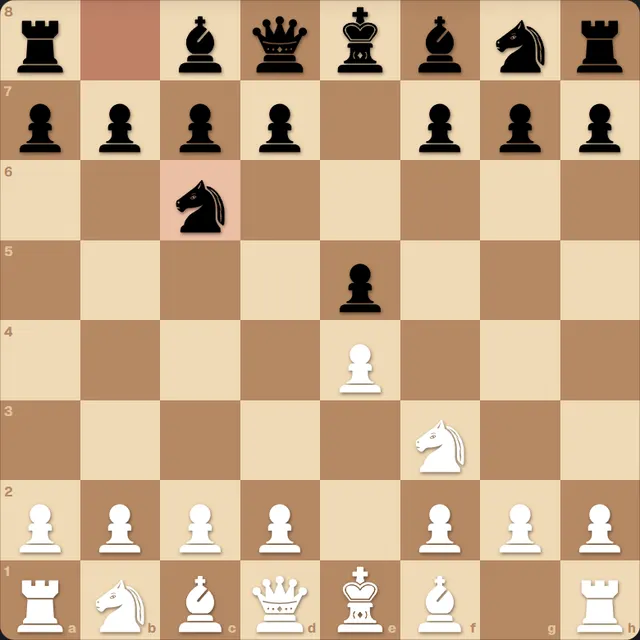
A rook moves any distance horizontally or vertically, a bishop diagonally, and a queen in either way. A king moves one square in any direction. A knight moves two squares in one direction and one perpendicular to it, jumping over intervening pieces. Other pieces cannot jump over obstacles. Capture an opposing piece by moving onto its square.
Pawns and promotion
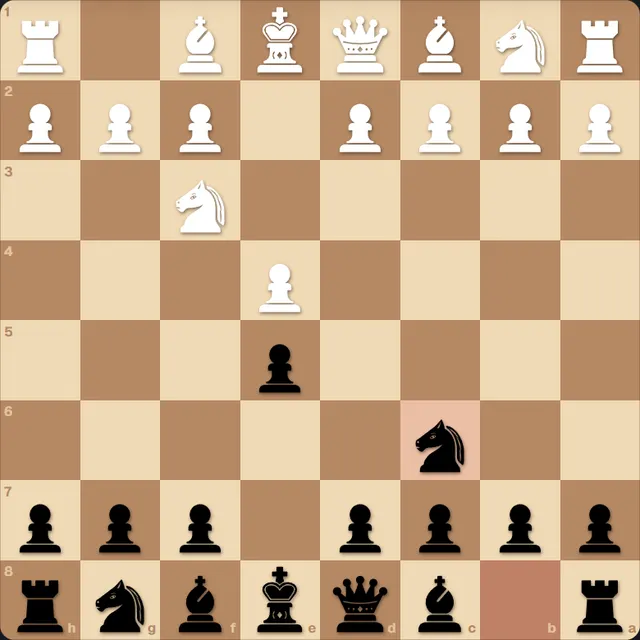
A pawn moves one square forward into an empty square. From its starting square it may move two if both squares are empty. It captures one square diagonally forward. On reaching the last rank, choose a queen, rook, bishop or knight. En passant is available only immediately after an adjacent pawn advances two squares: the capturing pawn moves onto the square that pawn passed over.

Check and castling
You may never leave your own king attacked. Answer check by moving the king, capturing the attacker or blocking its attack when possible. Castling moves the king two squares towards a rook and puts that rook on the king's other side. Neither piece may have moved, the intervening squares must be empty, and the king may not castle out of, through or into check.

Ending and clocks
Checkmate wins. Stalemate is a draw: the player is not in check but has no legal move. Draws can also result from a dead position, repeated positions, extended play without captures or pawn moves, or an accepted draw offer. Threefold repetition or 50 moves by each side without a capture or pawn move lets a player claim a draw. Fivefold repetition or 75 such moves by each side ends the game automatically, unless the last move delivers checkmate. The interface shows available draw claims. Resigning ends the game. Running out of time normally loses, unless the opponent cannot possibly checkmate, in which case the result is a draw. Any configured increment is added after a move.
You know the rules — time for a game.
Play now